UNSTRAIGHT MEMORIES
"Dick pics" scribbled on toilet walls in the 1800s. A pussy casting kit. A food processor. A ring from someone’s first love.
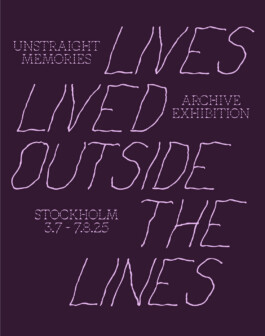
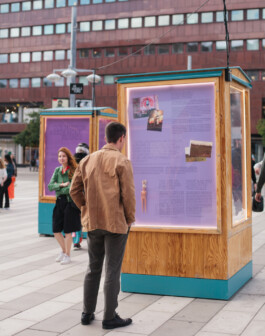
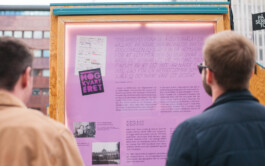
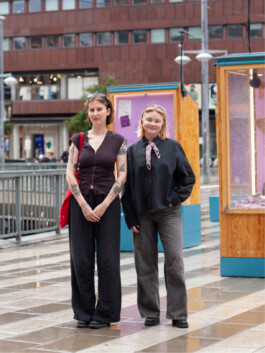
We curated, designed and wrote "Unstraight Memories – Lives lived outside the lines", an outdoor exhibition at Sergels torg in Stockholm. Everyday objects, places and memories from The Unstraight Museum's digital archive came together as a patchwork of lives usually left out of history books.
Photos 1, 4, 5, 8, 9, 10 & 13 by Sandra Åhman.
SERVICES
Research
Curatorial Concept
Spatial Strategy
Exhibition Design
Exhibition Copy
Editorial Design
Web Design
YEAR
2025


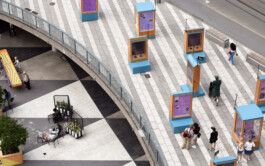
Stockholm's queer history doesn't follow a straight line. From the museum's archive of more than 600 objects, we chose 28 for the exhibition and paired them with personal stories and memories of queer places in and around the city. Instead of a timeline, we arranged the material thematically across three conceptual 'rooms': the Living Room, the Dance Floor, and In Between Spaces. This dollhouse approach was meant to create a sense of intimacy around each story, despite the exhibition standing in a square crossed by 100.000 people every day.
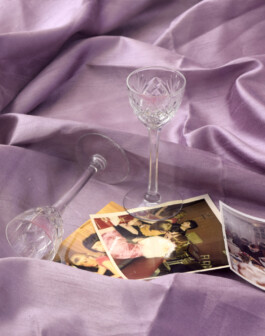
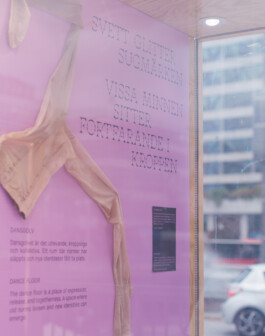
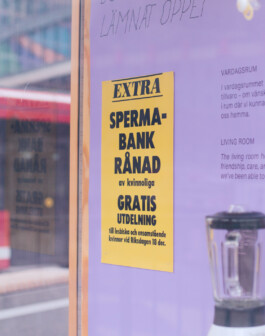
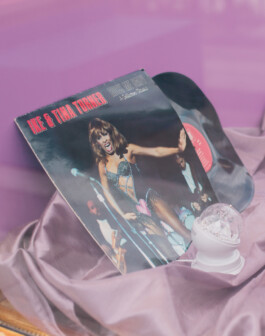
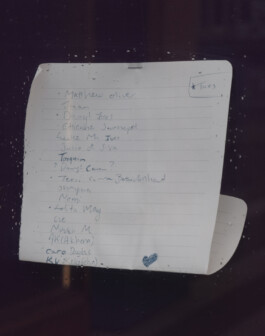
We staged the objects with fabric, pedestals, lighting and other playful interventions that created rhythm and contrast. On the dance floor: pantyhose stapled to the wall, a phone-controlled disco lamp, a melting Tina Turner vinyl. In the living room: a tablecloth, a miniature bookcase, framed photos and a recording of the "Lesbian National Anthem", performed for the exhibition by the women's choir Sapphonia.


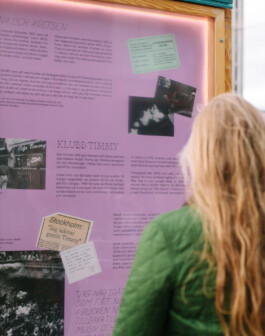
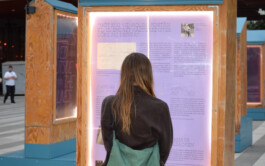
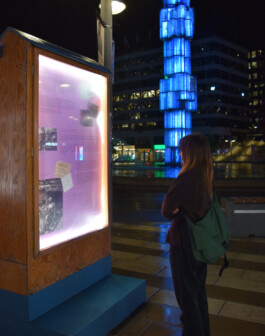
Showing the exhibition outdoors in the middle of the city meant that the design had to be legible at a distance and work in a crowded environment, so sizes, contrast and copy length were adjusted with that in mind. Visually, we wanted to balance the personal and the stylized. A palette of muted purples, pinks and blues referenced queerness and gender play.
The exhibition copy moved between intimacy and humor and highlighted both highs and lows. We wanted the texts to feel like fragments of lived experience rather than rather than historical records.


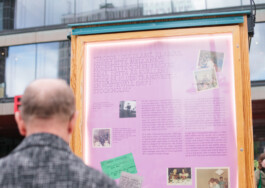
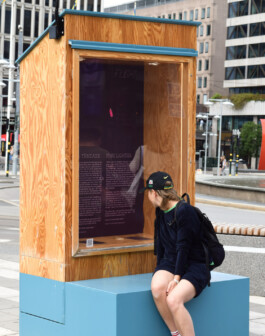
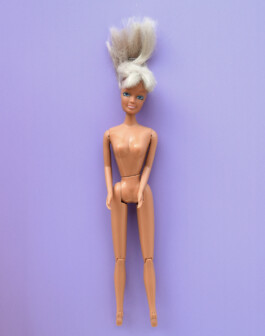
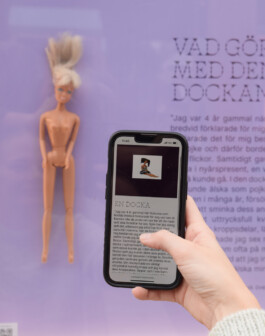
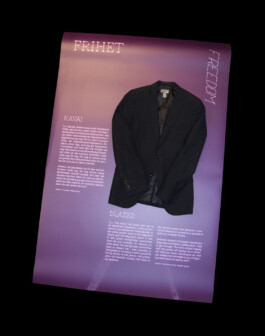
The stories were printed on large posters in the colors of each 'room', mounted to the walls of the display cases. At the base of the deeper cases, smaller story cards sat beside the objects so visitors could take more time with them. Some stories were tied to objects we only had photographs of. To bring these to life, we combined the flat prints with 3D pieces (blazers, Barbies, personal ephemera) stapled to the posters or hung just in front of them.
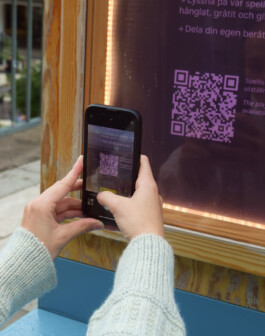
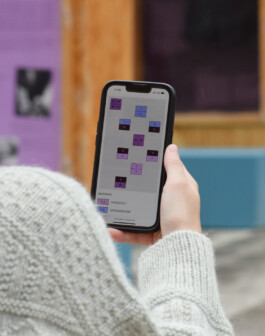
QR codes in each display added a digital layer that let visitors engage with the exhibition on their phones while moving through the bustle of the square. The website held all the stories in an accessible format, along with a crowdsourced playlist of queer anthems and other playful features (like the remote-controlled disco lamp). Visitors could even light up one of the displays by contributing their own story through the website.


We set the images and text blocks slightly off-kilter in the poster layouts, as a nod to "unstraight" design. This was both a conceptual decision and a practical one, since the layout had to adapt around the 3D objects.
Typography carried much of the tone: we used Cackhanded, a shaky hand-drawn font, for headlines to echo notes scribbled in diaries or on walls. By pairing it with Gyrator, an angular and ornamental typeface, we created tension in the design. Both typefaces share rounded elements but act as inverses of one another (one loose, the other more controlled). Body text was set in Ronzino, a clean sans serif, for legibility.


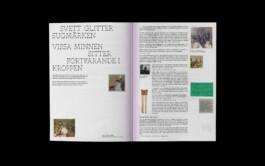
To extend the project, we also designed a publication compiling all the stories and objects shown at Sergels torg. It carried the patchwork structure into print, placing photographs and personal accounts side by side in an irregular, blocky layout. The publication is meant to live beyond the temporary outdoor show and may appear in future editions of Unstraight Memories.

Unstraight Memories presented queer lives as history in their own right. The exhibition was met with a lot of enthusiasm and we hope to be able to keep developing the format further. Keep an eye out!
Unstraight Memories was produced by The Unstraight Museum with support from Platssamverkan På Sergels torg.


UNSTRAIGHT MEMORIES
"Dick pics" scribbled on toilet walls in the 1800s. A pussy casting kit. A food processor. A ring from someone’s first love.
We curated, designed and wrote "Unstraight Memories – Lives lived outside the lines", an outdoor exhibition at Sergels torg in Stockholm. Everyday objects, places and memories from The Unstraight Museum's digital archive came together as a patchwork of lives usually left out of history books.
Photos 1, 4, 5, 8, 9, 10 & 13 by Sandra Åhman.
SERVICES
Research
Curatorial Concept
Spatial Strategy
Exhibition Design
Exhibition Copy
Editorial Design
Web Design
YEAR
2025


Stockholm's queer history doesn't follow a straight line. From the museum's archive of more than 600 objects, we chose 28 for the exhibition and paired them with personal stories and memories of queer places in and around the city. Instead of a timeline, we arranged the material thematically across three conceptual 'rooms': the Living Room, the Dance Floor, and In Between Spaces. This dollhouse approach was meant to create a sense of intimacy around each story, despite the exhibition standing in a square crossed by 100.000 people every day.
We staged the objects with fabric, pedestals, lighting and other playful interventions that created rhythm and contrast. On the dance floor: pantyhose stapled to the wall, a phone-controlled disco lamp, a melting Tina Turner vinyl. In the living room: a tablecloth, a miniature bookcase, framed photos and a recording of the "Lesbian National Anthem", performed for the exhibition by the women's choir Sapphonia.


Showing the exhibition outdoors in the middle of the city meant that the design had to be legible at a distance and work in a crowded environment, so sizes, contrast and copy length were adjusted with that in mind. Visually, we wanted to balance the personal and the stylized. A palette of muted purples, pinks and blues referenced queerness and gender play.
The exhibition copy moved between intimacy and humor and highlighted both highs and lows. We wanted the texts to feel like fragments of lived experience rather than rather than historical records.


The stories were printed on large posters in the colors of each 'room', mounted to the walls of the display cases. At the base of the deeper cases, smaller story cards sat beside the objects so visitors could take more time with them. Some stories were tied to objects we only had photographs of. To bring these to life, we combined the flat prints with 3D pieces (blazers, Barbies, personal ephemera) stapled to the posters or hung just in front of them.
QR codes in each display added a digital layer that let visitors engage with the exhibition on their phones while moving through the bustle of the square. The website held all the stories in an accessible format, along with a crowdsourced playlist of queer anthems and other playful features (like the remote-controlled disco lamp). Visitors could even light up one of the displays by contributing their own story through the website.


We set the images and text blocks slightly off-kilter in the poster layouts, as a nod to "unstraight" design. This was both a conceptual decision and a practical one, since the layout had to adapt around the 3D objects.
Typography carried much of the tone: we used Cackhanded, a shaky hand-drawn font, for headlines to echo notes scribbled in diaries or on walls. By pairing it with Gyrator, an angular and ornamental typeface, we created tension in the design. Both typefaces share rounded elements but act as inverses of one another (one loose, the other more controlled). Body text was set in Ronzino, a clean sans serif, for legibility.


To extend the project, we also designed a publication compiling all the stories and objects shown at Sergels torg. It carried the patchwork structure into print, placing photographs and personal accounts side by side in an irregular, blocky layout. The publication is meant to live beyond the temporary outdoor show and may appear in future editions of Unstraight Memories.

Unstraight Memories presented queer lives as history in their own right. The exhibition was met with a lot of enthusiasm and we hope to be able to keep developing the format further. Keep an eye out!
Unstraight Memories was produced by The Unstraight Museum with support from Platssamverkan På Sergels torg.

© 2026 Studio Dim | info@studio-dim.com
Studio Dim is a creative practice for communication, design and art run by Ida Dimić and Henrietta Andersson. Currently based between Stockholm and Berlin.
We want to use our expertise to support people and groups focused on social justice, cultural change and community.
Recent projects include a campaign for Sweden's largest democratic arena, curation and exhibition design for a queer museum and a new website for an indie cinema.
If you're working on something you care about, we'd love to hear from you at hi@studio-dim.com
Follow us: @studio__dim

Studio Dim is a creative practice for communication, design and art run by Ida Dimić and Henrietta Andersson. Currently based between Stockholm and Berlin.
We want to use our expertise to support people and groups focused on social justice, cultural change and community.
Recent projects include a campaign for Sweden's largest democratic arena, curation and exhibition design for a queer museum and a new website for an indie cinema.
If you're working on something you care about, we'd love to hear from you at hi@studio-dim.com
Follow us: @studio__dim