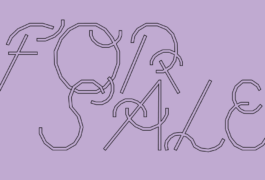
STUDIO FOR SOCIAL IMPACT SELLING OUT TO HIGHEST BIDDER
When we started Studio Dim, we thought we were making a break from traditional commercial work. The goal was to collaborate with cultural institutions and socially driven initiatives, to work on projects that aligned with our values rather than feeding into the endless churn of the industry machine. Like many others, we called it "social impact design".
What we didn't fully grasp at the time was that social impact had already been absorbed into the market, and become something we were helping to package. The new rhetoric of "making a difference with design" had long been instrumentalized, with its own aesthetic codes and strategic language. This is how capitalism persists.
In The New Spirit of Capitalism (1999), Luc Boltanski and Eve Chiapello put forward the notion that critique is not an external threat to capitalism, but one of its key drivers. A good example of this is how the public (and legislative) demand for sustainability produced corporate greenwashing. Capitalism turns dissent into new markets and the design industry plays a central role in this process. As designers, we are part of creating the communicative systems that make inequity and power consolidation look human. "Purpose-driven" design agencies operate within the same economic and institutional frameworks as the corporations they critique, because the work is still governed by monetization and engagement metrics. Even the most "radical" ideas must be made palatable and refined enough to be displayed in a pitch deck.
As Ruben Pater aptly points out in The Politics of Design (2016), design is never neutral. Every visual and communicative system either reinforces or disrupts dominant power structures. The reality of most purpose-driven design is that it does neither. At best, it aestheticizes struggle and renders complex realities into polished deliverables.
So, now what? We don't have perfect answers and we still take on projects that exist within these contradictions. But we've become less interested in work that fits neatly into a portfolio. We care more about projects that embrace process over final output, that allow for experimentation and questioning rather than smoothing over the complexities of existing within broken systems.
While design is not automatically activism, it is part of the ideological infrastructure that shapes how the idea of progress is framed. If design can serve as a tool of capitalism, it can also serve as a site of resistance. We hope we can collectively move on from the question whether design is political (it always is), and start focusing on whose interests our work serves.
STUDIO FOR SOCIAL IMPACT SELLING OUT TO HIGHEST BIDDER
When we started Studio Dim, we thought we were making a break from traditional commercial work. The goal was to collaborate with cultural institutions and socially driven initiatives, to work on projects that aligned with our values rather than feeding into the endless churn of the industry machine. Like many others, we called it "social impact design".
What we didn't fully grasp at the time was that social impact had already been absorbed into the market, and become something we were helping to package. The new rhetoric of "making a difference with design" had long been instrumentalized, with its own aesthetic codes and strategic language. This is how capitalism persists.
In The New Spirit of Capitalism (1999), Luc Boltanski and Eve Chiapello put forward the notion that critique is not an external threat to capitalism, but one of its key drivers. A good example of this is how the public (and legislative) demand for sustainability produced corporate greenwashing. Capitalism turns dissent into new markets and the design industry plays a central role in this process. As designers, we are part of creating the communicative systems that make inequity and power consolidation look human. "Purpose-driven" design agencies operate within the same economic and institutional frameworks as the corporations they critique, because the work is still governed by monetization and engagement metrics. Even the most "radical" ideas must be made palatable and refined enough to be displayed in a pitch deck.
As Ruben Pater aptly points out in The Politics of Design (2016), design is never neutral. Every visual and communicative system either reinforces or disrupts dominant power structures. The reality of most purpose-driven design is that it does neither. At best, it aestheticizes struggle and renders complex realities into polished deliverables.
So, now what? We don't have perfect answers and we still take on projects that exist within these contradictions. But we've become less interested in work that fits neatly into a portfolio. We care more about projects that embrace process over final output, that allow for experimentation and questioning rather than smoothing over the complexities of existing within broken systems.
While design is not automatically activism, it is part of the ideological infrastructure that shapes how the idea of progress is framed. If design can serve as a tool of capitalism, it can also serve as a site of resistance. We hope we can collectively move on from the question whether design is political (it always is), and start focusing on whose interests our work serves.
© 2026 Studio Dim | info@studio-dim.com
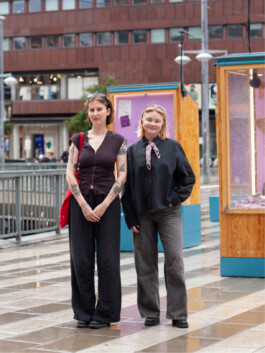
Studio Dim is a creative practice for communication, design and art run by Ida Dimić and Henrietta Andersson. Currently based between Stockholm and Berlin.
We want to use our expertise to support people and groups focused on social justice, cultural change and community.
Recent projects include a campaign for Sweden's largest democratic arena, curation and exhibition design for a queer museum and a new website for an indie cinema.
If you're working on something you care about, we'd love to hear from you at hi@studio-dim.com
Follow us: @studio__dim

Studio Dim is a creative practice for communication, design and art run by Ida Dimić and Henrietta Andersson. Currently based between Stockholm and Berlin.
We want to use our expertise to support people and groups focused on social justice, cultural change and community.
Recent projects include a campaign for Sweden's largest democratic arena, curation and exhibition design for a queer museum and a new website for an indie cinema.
If you're working on something you care about, we'd love to hear from you at hi@studio-dim.com
Follow us: @studio__dim
